Bacon - It's not just for breakfast anymore!
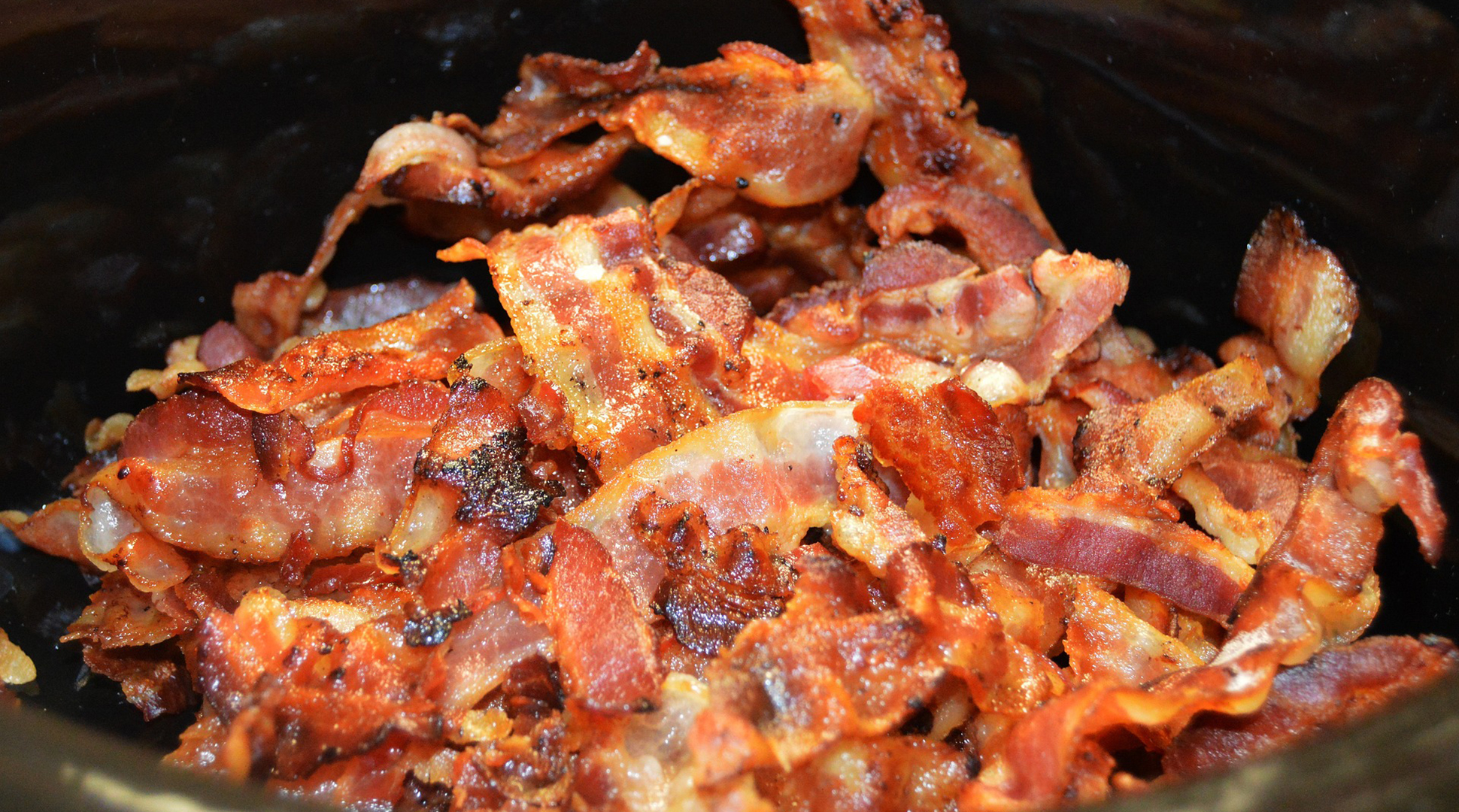
by Dawn Smith-Pfeifer
Bacon isn’t just for breakfast anymore.
Bacon-wrapped asparagus is a staple at our house. Pairs well with a grilled steak.
Have you ever tried candied bacon? How about bacon ice cream? Yes, it’s a thing.
According to the National Day Calendar, scientists say bacon is one of the most pleasing smells to people. And if you’ve ever cooked bacon, you probably don’t need a scientist to convince you. The smell seems to travel through the entire house. Even our furry housemates seem to know exactly what’s happening in the kitchen.
That got me thinking: “Why does bacon smell so good?”
Pretty soon, I found myself going down an internet rabbit hole lined with bacon. Figuratively speaking, of course.
Have you ever heard of the Maillard reaction? Neither had I until today. Naturally, I had to learn everything I could about it.
My first stop was Wikipedia, which explains that the Maillard reaction is responsible for many of the colors and flavors we love in food. Think about the browning of meat when it’s seared or grilled, the browning and savory flavor of fried onions, or the aroma of coffee as it roasts.
Then I turned to Serious Eats. They explain that scientists still don’t completely understand every detail, but they know the basics. The Maillard reaction is actually a series of chemical reactions that happen when proteins and sugars in food are transformed by heat. Those reactions create new flavors, aromas and colors.
In layman’s terms? Heat turns ordinary food into something that smells and tastes amazing.
And bacon is a perfect example.
As bacon cooks, heat causes those proteins and sugars to react. The result is that familiar browned, crispy bacon with a smell that can make people suddenly appear in the kitchen asking, “Is it ready yet?”
But it’s not just bacon. The Maillard reaction happens with all kinds of foods.
Think about a steak. You could eat it raw, but most of us would much rather season it and put it on the grill. Give it some Worcestershire sauce, garlic, pepper, and salt, then let the heat work its magic. The outside browns, the aromas develop, and suddenly you’ve got a steak that makes your mouth water.
Or take a potato.
You can eat a raw potato, but do you really want to?
Fry those potatoes in olive oil with bacon, a little salt, pepper and parsley, and you’ve got a delicious side dish for your favorite sausage-and-kraut meal. The potato goes from pretty ordinary to something you might find yourself going back for seconds.
And that’s part of what makes cooking so interesting. Heat doesn’t just make food warmer. It can change the color, texture, aroma and flavor.
But getting back to the point. Why do we love bacon so much? It's chemistry! (Pun intended!)
Cooking bacon creates hundreds of flavor and aroma compounds. The Maillard reaction is a series of chemical reactions that cause those compounds to develop, giving cooked bacon its distinctive smell, color, and flavor.
So the next time you smell bacon cooking, you’re smelling a little food science at work.
And if that science happens to involve bacon-wrapped asparagus, candied bacon or bacon ice cream, I’m not going to argue with it.
I’ll just grab a fork. Or a spoon. We have to be civilized about it, after all! 😉
Recipes to try:
Grilled potato salad from My Complete Cooking's Justin Segelstrom
Smoked chicken bombs from My Complete Cooking's Justin Segelstrom
Farmhouse skillet Mac-n-cheese from My Phat Hen's Esther Donohue