
Food Facts
What's the word on sustainability?
Did you know these facts about how farmers and ranchers are continually improving to meet consumer needs?
Sustainable Dairy production
According to the American Farm Bureau Federation, the pounds of feed (grain, forage, etc.) a dairy cow needs to eat to produce 100 pounds of milk has decreased by more than 40% on average in the last 40 years.
Pizza starts on a farm
Pizza is arguably our favorite food. Check out our page devoted to all things pizza!
Food is still a bargain in the United States
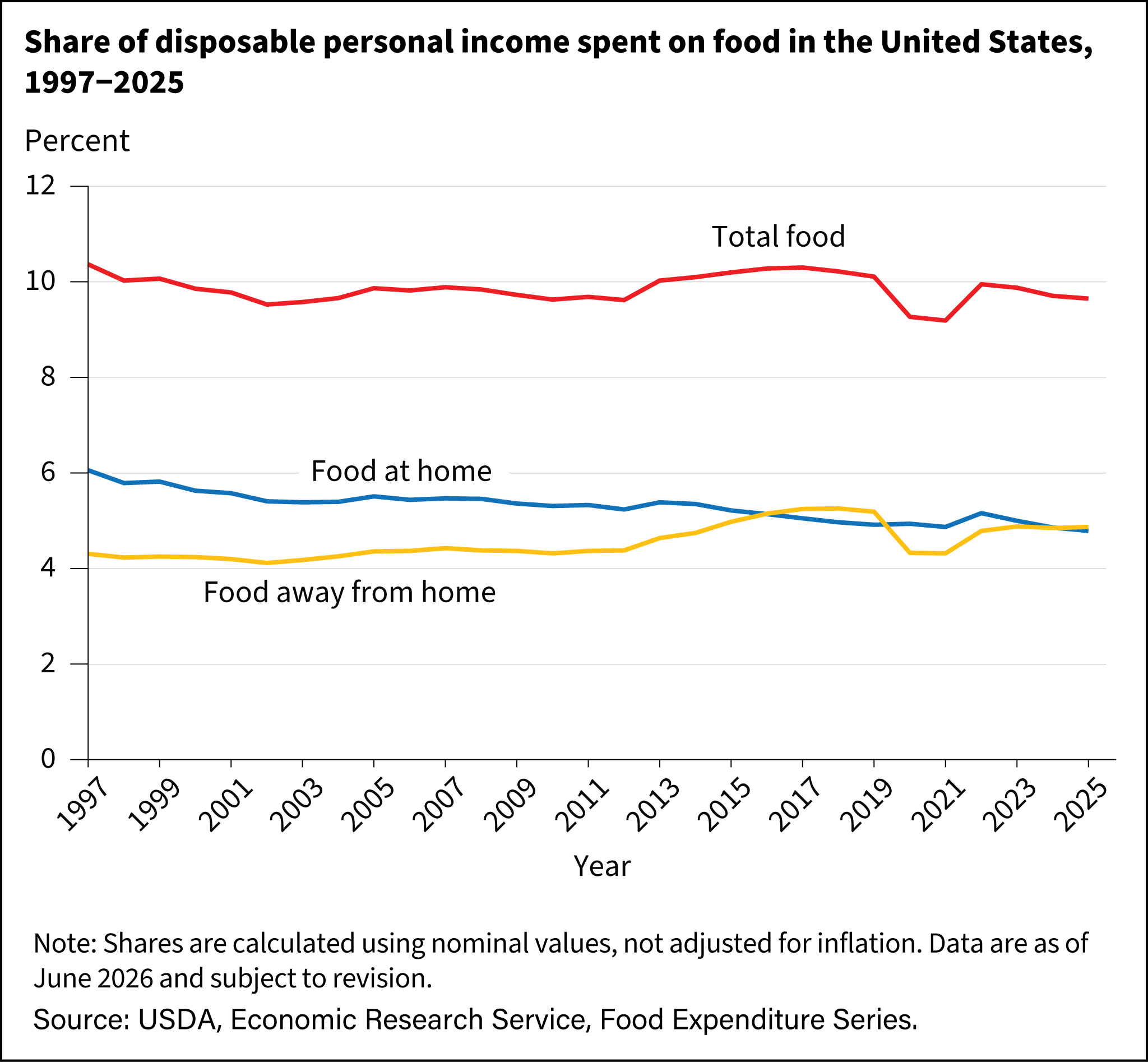
In 2025, U.S. consumers spent an average of 9.7 percent of disposable personal income on food, down from 10.4 percent in 1997. The decline was driven by a lower share spent on food at home, which was 4.8 percent in 2025, down from 6.1 percent in 1997. The share spent on food away from home was 4.9 percent in 2025, up from 4.3 percent in 1997. These trends show that the overall share of disposable income spent on food declined from 1997 to 2025, with the decline in the share spent on food at home more than offsetting the increase in the share spent on food away from home.
Additionally, U.S. consumers continue to spend less than most countries. The percentage of consumer expenditures spent on food that was consumed at home in 2025 was:
United States: 6.4%
United Kingdom: 8.3%
Canada: 9.5%
Sweden: 13.7%
Japan: 16.3%
Mexico: 25.4%
Only Singapore had a lower percentage than the United States at 6.3%.
Taste, not waste
A whopping 40% of all food grown and produced in the U.S. is never eaten.
One U.S. farm feeds 183 people
According to the American Farm Bureau Federation, on average, one U.S. farm feeds 183 people annually in the U.S. and abroad. The global population is expected to increase by 1.8 billion by 2050, which means the world’s farmers will have to increase total annual grain production by almost 1 billion tons and total meat production by more than 200 million tons.
Biotechnology benefits consumers
Improved crop disease protection through biotechnology provides a more reliable harvest. Use of biotech crops worldwide has led to an 8.6% reduction in pesticide applications and helped increase yields by 22%. This means food is consistently available and more affordable.
Doing more with less
Agriculture accounts for less than 10% of total U.S. greenhouse gas emissions, far less than transportation, electricity generation and industry. In 2023, agricultural activities made up 9.6% of gross U.S. emissions, according to the Environmental Protection Agency.
How big is an acre?
An acre is about the size of a football field without the end zones.