by Kelli Bowen
Besides the wackiness of this January weather, we had something wacky happen in our coop this month. Instead of wacky, maybe “uncommon” is a better term. After the warm-snap and then the plunge back into the seasonal-temps, Miss E came in with news. She needed to wash her chicken-chore coat. Why? She had smashed eggs in her pocket.
This wasn’t a slip and fall scenario. She had been collecting eggs. When she reached down into the nesting box to collect the last egg, and felt something so strange, her arm jerked back and her elbow crushed the eggs that were in her pocket. In her hand, she was holding an egg with no eggshell.
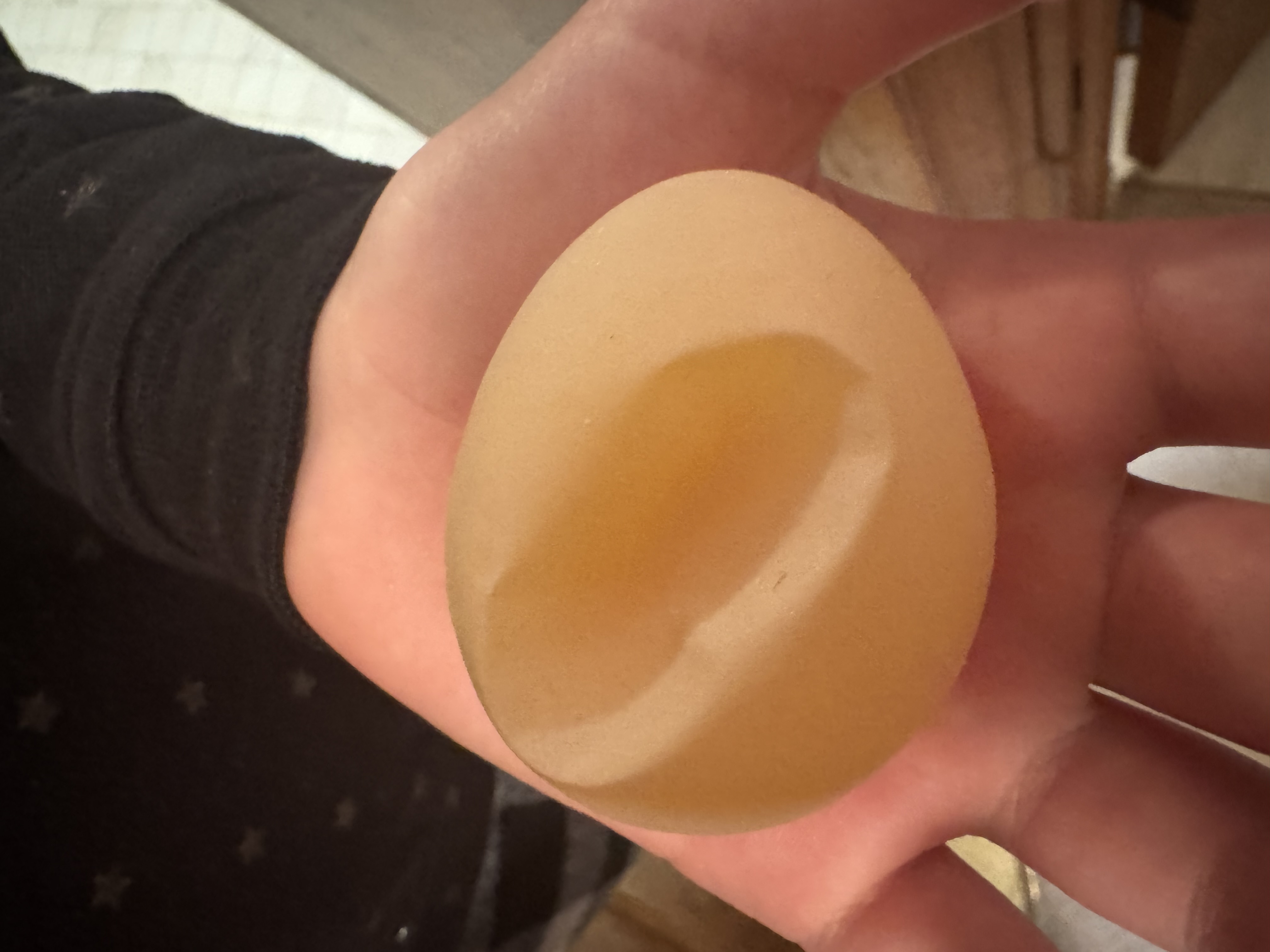
Miss A found playing with the wobbly egg GREAT fun. I requested she not play with the egg on the carpet as the girls took turns wobbling the egg with enthusiasm. This was our first shell-less egg with these girls.
Chickens can lay eggs with no shells for a few different reasons: they may be just figuring out this whole egg-laying thing, which is not our case, as all of our ladies have been laying for months now. The chicken could be too old and ending her career as an egg-layer. This is also not the case, as our flock is less than a year old.
The hen could be stressed. This is possible with the drastic fluctuation in temperature: it was 50 degrees, and they were out free-ranging in the sunshine less than a week ago, and then we plunged into subzero, and the flock is locked in the coop 24/7 again. It’s also the time of year predators start coming around more. We had the hint of skunk this week, and a very fluffy coyote across the road a few days ago. Other than making sure the coop is shut tight, the yard light on, or sending Miss E out to do more in-house chicken-therapy, we can’t really help the weather or potential nasty visitors who stalk outside.
Another option for the wobbly egg sack sans eggshell, is the hen may have a calcium deficiency. Since this is the most likely and treatable issue, we decided to bulk up their calcium with our easiest on-hand solution: egg shells.
Eggshells are a good source of calcium, but a person doesn’t want their chickens to identify eggs as a food source; otherwise, it’s a race between you and the chicken as to who gets to eat the egg, so there’s a little preparation involved in feeding back eggshells.
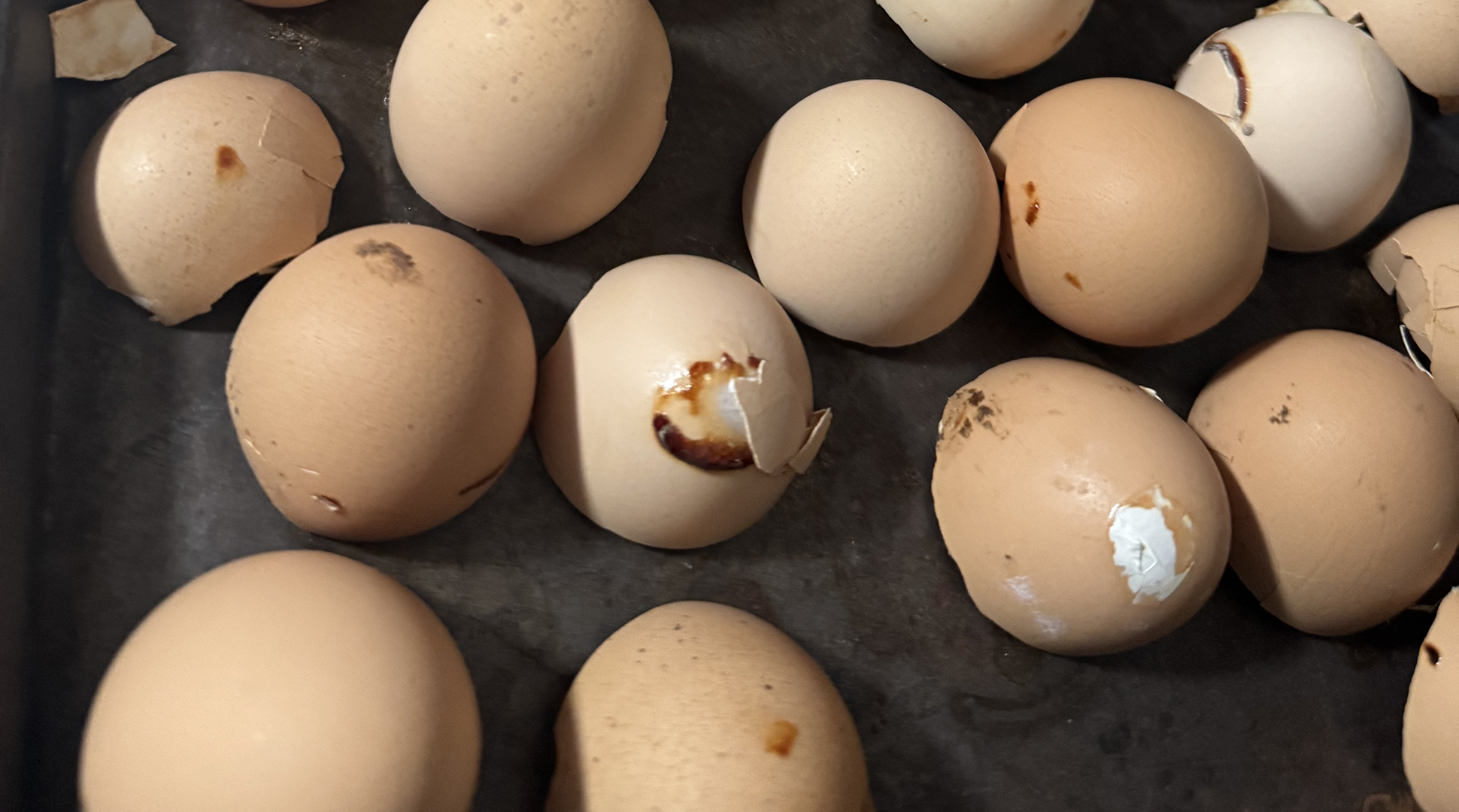
Collect some used eggshells. This isn’t a problem for us, as we eat quite a few eggs. Bake the eggshells for 10 minutes to sterilize them. Then crush them so they aren’t recognizable. This is Miss E and Miss A’s favorite part. Once we have a small bowl of crushed shells, we take them out and mix them with their food, and the chickens gobble them up.
We haven’t had a shell-less egg since giving them an extra dose of shells, so we must have found the solution to our problem. Egg shells are also great for composting, so if your soil could use a calcium boost, try an egg. Tomatoes need calcium for strong cell walls, firm fruit, and to help prevent blossom end rot.
So the next time you have an egg, don’t toss the shell: use it!
 Kelli, a North Dakota girl through and through, has made her home from the eastern prairies to the western badlands with her supportive Hubby, two daughters, and ever-growing menagerie accompanying her along the way.