The farm pressure you can't see at the grocery store

by Terri Moore, AFBF Vice President, Communications
If you bought beef recently, you probably experienced sticker shock over high prices; yet farmers are experiencing the opposite shock, as the price they’re paid for their cattle falls. How can that be? It’s the result of a complex food supply chain, and beef isn’t alone. It’s a scenario playing out across a variety of agricultural products: big disparities between retail prices and farm gate prices. Before we delve into shoppers’ perceptions about it, let’s compare.
According to the Bureau of Labor Statistics, the national average retail ground beef price was 7.4% higher in August 2026 than in August 2025, but farmers were paid 10% less for their cattle. Farm prices for fresh vegetables were 7.3% lower in August than a year earlier, while the prices consumers paid at grocery stores rose 3.2%. Dairy farmers saw milk prices fall 3.5%, but retail dairy prices slipped just 0.3%.
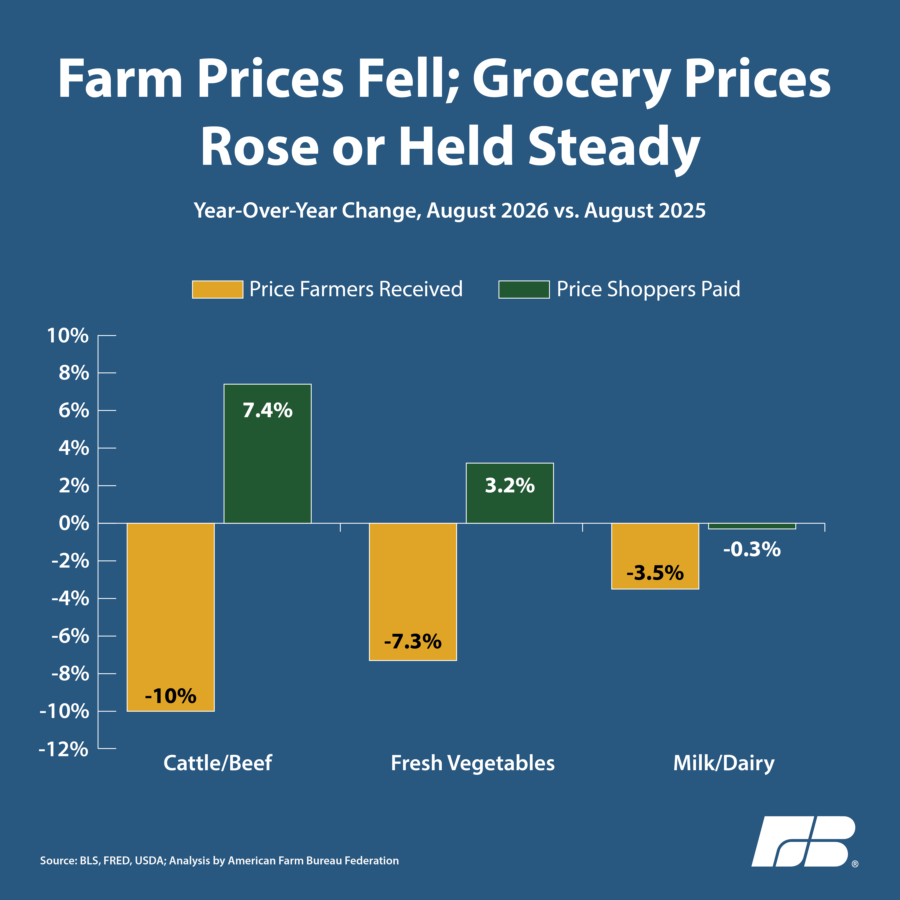
Farmers are Price-Takers, Not Price-Makers
Some of this gap is timing. Farm prices swing far more than grocery prices, and store prices typically trail and are often not very related to price changes at the farm. The costs of getting food from field to shelf, such as diesel, labor and packaging, haven't gone away and continue to get costlier.
But the pattern points to something farmers know well. When prices for their crops and livestock fall, they feel it right away. Yet, when their production costs rise, they can't pass along the increase when they sell their products. Farmers have to sell at whatever price the market sets because they are price-takers, not price-makers.
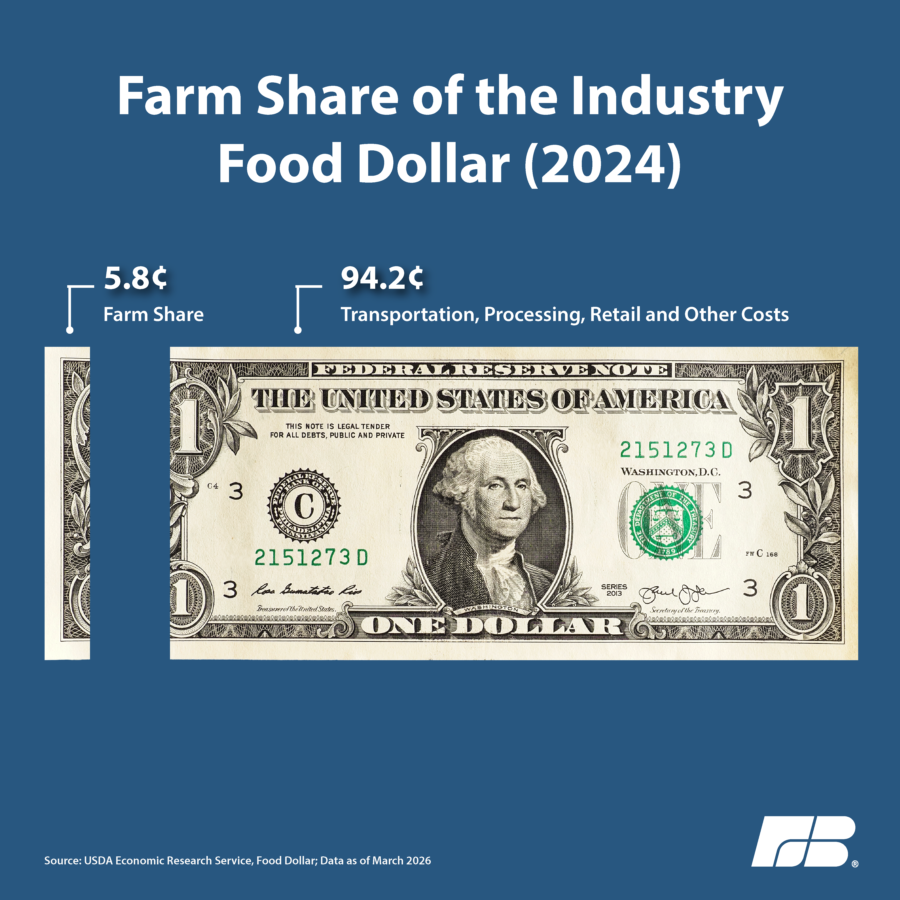
This point is illustrated well in the USDA’s breakdown of the farmer share of the industry food dollar, analyzed in a Farm Bureau Intel earlier this year. In 2024, that share was only 5.8 cents of every dollar spent on domestically produced food. The remaining 94.2 cents of the food dollar went toward costs associated with food processing, transportation, retail and other costs. There are different ways USDA analyzes the food dollar, including what’s referred to as the marketing food dollar, but any way you slice it, the farmer’s share is less than 7 cents.
That's why the farm economy can be in trouble — like it is now — even when grocery prices are normal or elevated. The turbulent winds swirling around farmers have left many underwater ... again. For some, it’s their fifth year in the red. Bottom line: farmers have many obstacles to overcome.
On the brighter side, public perception that they are big beneficiaries of high grocery prices is not among them. I’ve literally had dozens of conversations with farmers worried about this perception. The comment I hear goes something like this: “The public is going to think high food prices mean we’re lining our pockets and we need them to know that’s just not the case.”
Read the entire article here